By Emmanuel Proussaloglou, Dana Cuff, and Yang Yang
As Los Angeles continues to grapple with a housing affordability crisis, vulnerable tenant populations like Transitional Age Youth (TAY), young families, and senior citizens are being disproportionately affected. To address their challenges effectively, we need a “yes-and” model that foregrounds locally tailored, multifaceted housing approaches. That’s why cityLAB-UCLA, with funding from United Way Greater LA and Cedars-Sinai, has spent the last eight months studying the impact potential of Intergenerational Housing projects that intentionally mix these three at-risk populations.
While successful Intergenerational Housing projects exist abroad and elsewhere in the US, Los Angeles has yet to build a truly Angeleno model tailored for our local context. At the same time, informal intergenerational living—where multiple generations of a family live under the same roof—is a common pattern in Southern California, shaped by both economic necessity and cultural practice. That’s why this work is so timely.
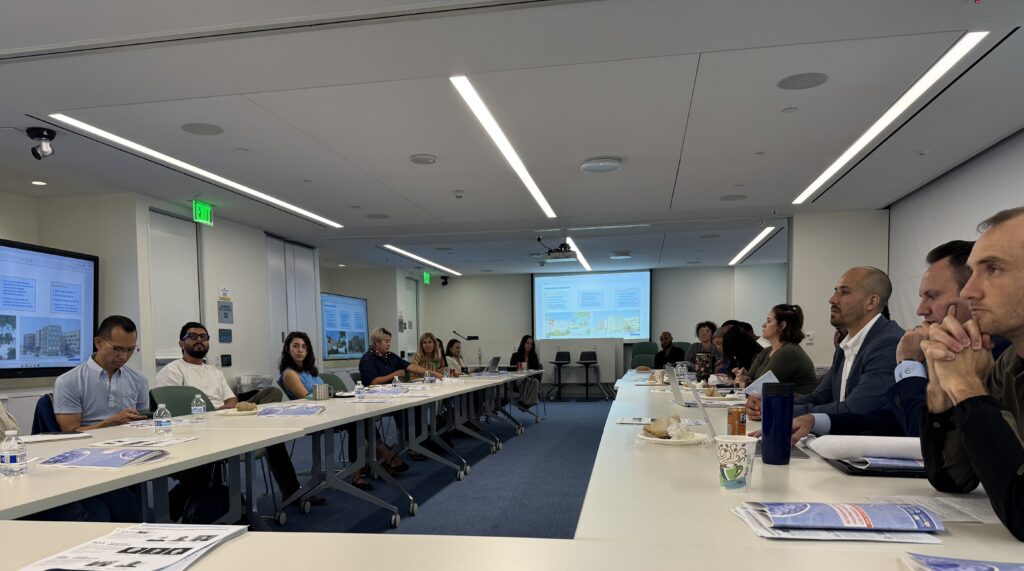
Through this project, cityLAB identified design and development best practices, gathered feedback from community groups in MacArthur Park and Altadena, and uncovered remaining roadblocks to delivering these projects at scale. Our precedent analysis showed that shared spaces are essential to project success, and that seniors are currently overrepresented in US projects owing to stringent tenancy laws. Our literature review determined that high-quality intergenerational housing must accommodate changing lives; balance independence, privacy, and proximity; include shared spaces that support daily life and belonging; and support effective governance. Our engagement sessions surfaced a desire for connection, mutual support, and shared programming, alongside a need for privacy and resident choice.
Building on these findings, cityLAB then worked with Kevin Daly Architects and Abode Communities to create two demonstration projects tailored for different LA contexts, using these pilot projects to test how existing regulations, community needs, and our research findings could come together to produce new housing.
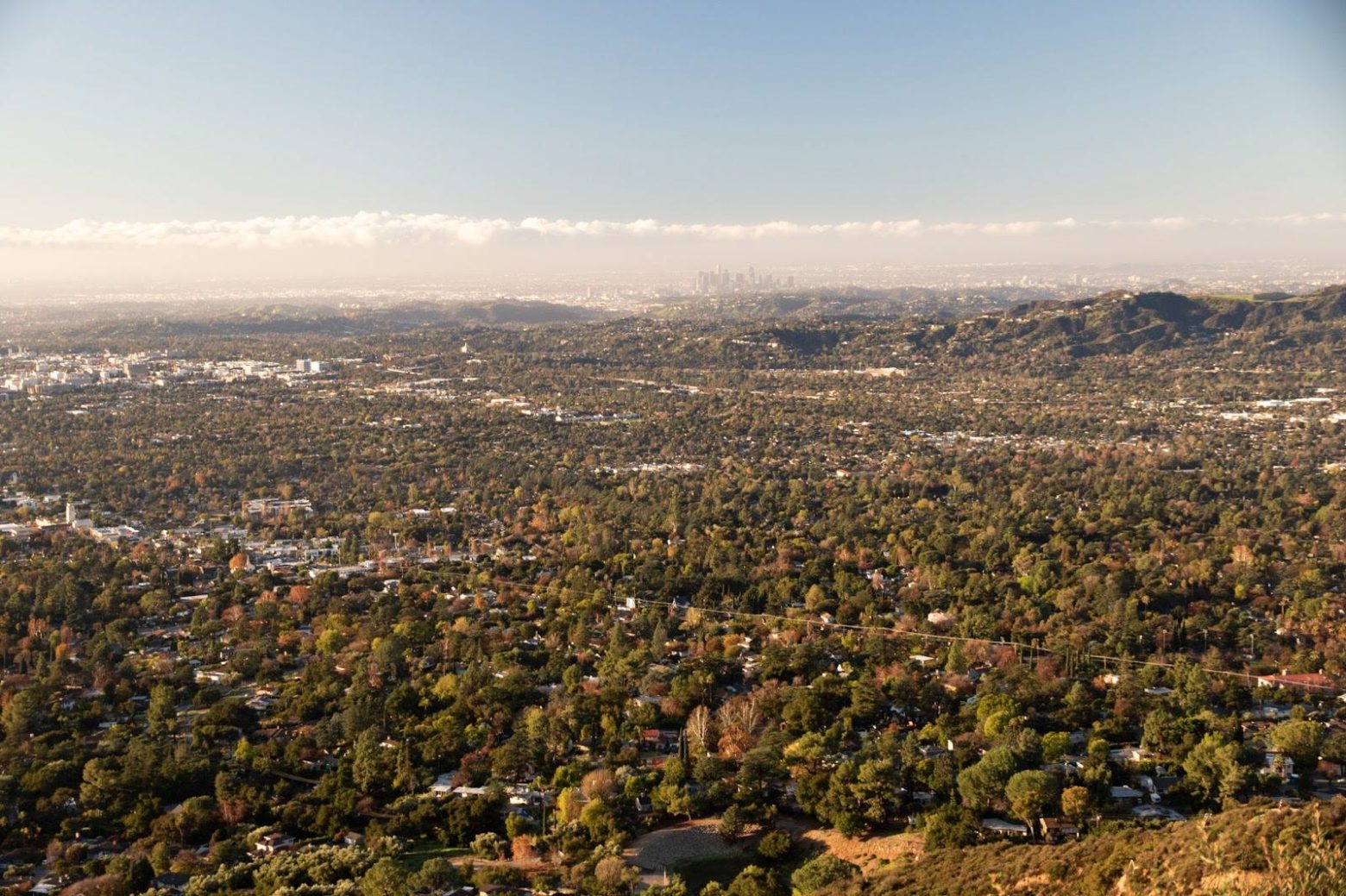
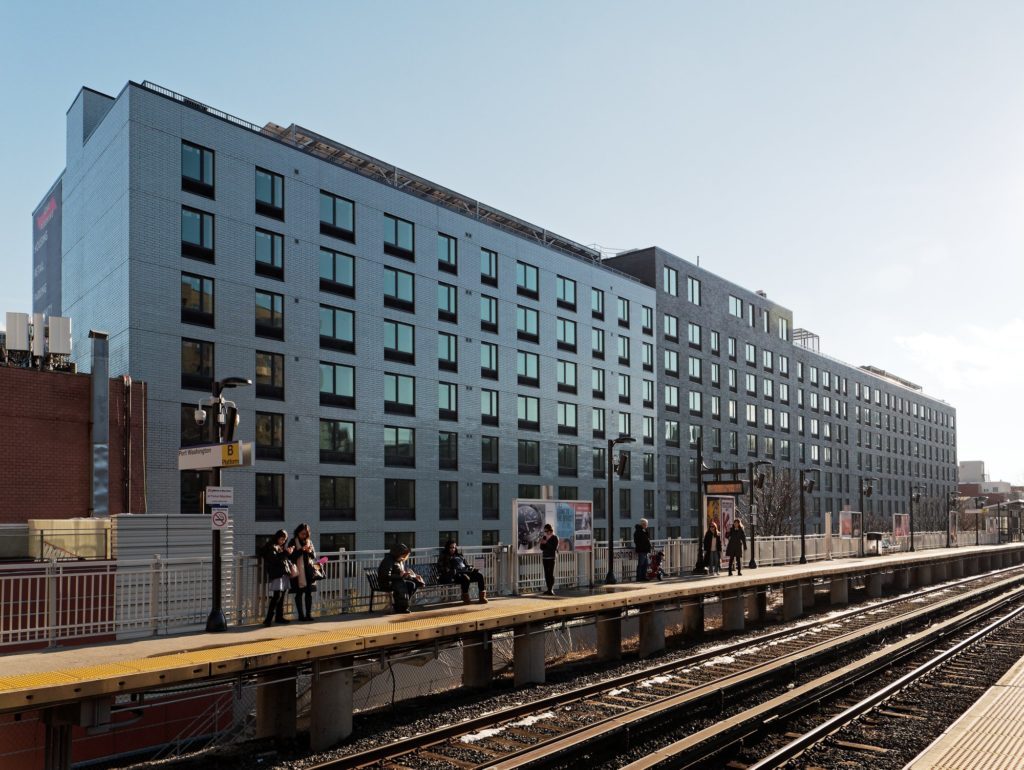
The Altadena prototype demonstrates the opportunities for Intergenerational Housing in lower-density, elder-centered suburban contexts while responding to the community’s need for recovery, affordability, and neighborhood continuity following the Eaton fire. Organized around courtyards, gardens, paseos, and outdoor rooms—each calibrated to TAY, family, or elder populations—the project is legally separated into two parcels to meet tenancy requirements. Its construction relies on proven multifamily building systems that prioritize cost control, durability, architectural quality, and wildfire resilience suited to Altadena’s foothill setting. The MacArthur Park prototype shows how dense urban neighborhoods can also effectively support Intergenerational Housing. It builds upward, creating privacy while enabling connection across an open ground plane. A series of outdoor courtyards and interior shared spaces provide tailored space for each tenant group, while the ground floor ensures resident safety while presenting an open, handsome face to the neighborhood.
Both projects balance tenancy and financing constraints while responding to community desires and delivering effective population mixing. Our work suggests that the best Intergenerational Housing projects share a core ambition: to create environments where people at different life stages can live in meaningful proximity, supported by shared space and collective organization but never forced into engagement. We have been struck by the impact potential of this housing type, and we are confident that the report’s building schemes and best practices will help stakeholders turn their ideas into LA’s first generation of built Intergenerational Housing projects.
The Intergenerational Housing Models for Los Angeles study is available here.
About the Authors:
Emmanuel Proussaloglou is an architect, planner, and researcher focused
on interrogating the impact of public policy on the built environment. He’s co-director of cityLAB-UCLA, leading the Reimagining Housing research area, and his current work focuses on studying the design, provision, and distribution of affordable housing.
Dana Cuff, Founder and Director, cityLAB-UCLA and Professor, Department of
Architecture and Urban Design, University of California, Los Angeles (UCLA).
Yang Yang is an architectural historian; her research explores housing
and transnational urbanism through the lenses of media, interiority, and
cultural theory, with a focus on the intersection of macroeconomic policy
and everyday counternarratives. She is co-director of cityLAB-UCLA.