
As Los Angeles aims for scalable solutions to prevent homelessness, new evidence points to the direct impact of income support for the most vulnerable populations.
In this Q&A, Morgan Sutton, Manager of Homelessness Initiatives (Older Adults) at United Way of Greater Los Angeles, walks us through key findings from a recent evaluation of the first phase of the United to House LA Interim Income Support Program for Seniors and People with Disabilities. The analysis, commissioned by United Way with funding support from Cedars-Sinai, was recently released by the Center for Guaranteed Income Research at the University of Pennsylvania and the College of Social Work Office of Research and Public Service at The University of Tennessee, Knoxville.
The report highlights the importance of incorporating community voices, individually tailored legal advice, and the need for a permanent income support program to provide a scalable solution to prevent homelessness.
Key findings include the need for legal aid to maintain social benefits, with 52% of surveyed participants enrolling in new benefits and only 10% losing existing ones. Future phases of the program aim to adjust support based on fair market rental rates and to provide ongoing monthly income support.
What is the difference between the terms “guaranteed income” and “income support”?
It’s important to clarify the meaning of these terms to better understand how this program is unique. Guaranteed Income (GI) programs are much broader and offer regular cash payments to supplement income. GI programs are much more open to come as you are. There are very little, if any, restrictions to participate. Income Support Programs (ISP) are similar in that they aim to provide financial assistance to families, but participants must meet specific criteria to be eligible for the program. This income support program is very prescriptive to the population it serves (rent-burdened seniors 65+ and/or people with disabilities) but remains flexible for participants to use the awarded funds to support any economic need that would ensure housing stability (ex. rental arrears, car payments, medical or other debts). This ISP was also a one-time lump sum payment of $20,000.
Did this report reveal any challenges that participants faced prior to receiving the income support, and what did the report find to be a helpful tool for supporting participants throughout the program?
Debt burdens are pushing seniors and people with disabilities into deeper poverty and while income support can certainly help in relieving some of that debt, it will not get them to the level of thriving that you might assume someone would if they were able to increase their income. The reality is, for these populations, they are not usually able to increase their incomes, because then they’re unable to qualify for the benefits that they receive.
What we know about the households that participated in this evaluation is that there were often debts that went beyond what they were able to address through this income support program. And that’s not easy to hear, but it is necessary to know that the existing systems are not meeting the needs of people that are experiencing this type of debt and ongoing debt.
Surveyed participants owed on average $16,420 in missing required bills or overdue rent or mortgage payments. When asked what their most recent reason(s) were for falling behind on housing payments, participants most often reported: (42%) job loss; (41%) an unexpected financial emergency; (36%) income loss; (29%) increase in rent or mortgage. Seniors and people with disabilities often receive public benefits, like Social Security and CalFresh, to support basic essentials, but the rates for many of those programs have not been increased with inflation, leading to major gaps in household incomes.
About 92% of participants surveyed were renters, and 84% spent more than half their income on rent. Only 34% reported living in a rent stabilized unit; 6% lived in public housing; 3% received Section 8 or Housing Choice Vouchers. These statistics show us that participants in this program are overwhelmingly paying market-rate rent and struggling to keep up.
Respondents had an average of $762 in savings; 32% of respondents had less than $100 in savings, assets, investments, and retirement accounts; and 78% of respondents were still worried about being able to pay a utility bill. This is because there is often a legally restricted amount that a person may have in savings before they see a reduction in benefits received. This means that participants with social benefits would not be able to put away any of the money they received from this program, and 42% of respondents reported that they would not currently be able to pay an emergency $400 expense.
Another key takeaway from this report is that investing in legal aid for the participants can avoid loss of critical income sources. We found that more than half of the participants enrolled in new benefits and less than 10% of those who participated lost any benefits because of receiving this extra income. Losing partial or full access to benefits after receiving a large influx of income, even if it is a one-time lump sum payment, can put households on (what is often called) the “benefits cliff,” and many people might face that cliff if not for having a service provider to support them in reviewing their options of how best to receive income support. Our legal aid partner, Legal Aid Foundation of Los Angeles, was critical in following up with participants on the best ways to receive the income support without losing current enrolled benefits, and to make sure that those who did qualify for more benefits were enrolled in those new benefits, as well.
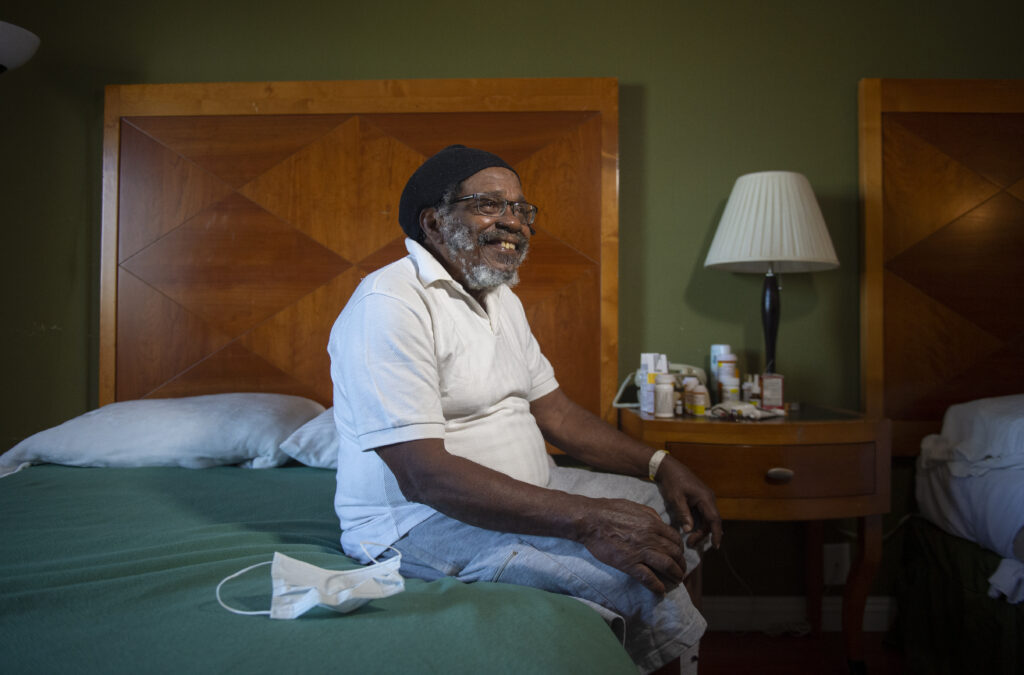
How do you see this program impacting vulnerable populations beyond the City of Los Angeles?
As we look forward to the next phases of this program, we need to continue to keep people housed stably and avoid the inevitable kind of cliffs that come, not just with benefits, but medical cliffs, family challenges, and other economic challenges that are inevitable for these households. I’m certain this program is only going to improve. We’re already seeing, with the second phase of this program and with the results of this evaluation, that the partners are excited that this is a program that has been proven successful time and again. Income support can help to keep our most vulnerable Angelinos housed stably. It needs to be a program that is replicated at the county level, the state level, and the federal level. Many of these programs often live as pilots, and that is simply unacceptable at this point, because we have so many examples of programs like this across the country working for our most vulnerable Americans, and this should be a program that is really seen as permanent support for people who are in the most vulnerable economic situations.
What’s next for the Income Support Program?
The City of Los Angeles is moving forward with a permanent program that will be able to support this population in the future through monthly ongoing payments, though larger system changes are necessary to ensure that households are prevented from being in this unstable economic situation in the first place.
A link to download the full report is available HERE.
STAY CONNECTED WITH UNITED WAY OF GREATER L.A.
📱Follow Us!
Instagram | Facebook | Twitter | LinkedIn | TikTok | YouTube
📩 Stay United, Stay Updated:
Subscribe for exclusive policy updates, resources, latest news, volunteering opportunities, and more!