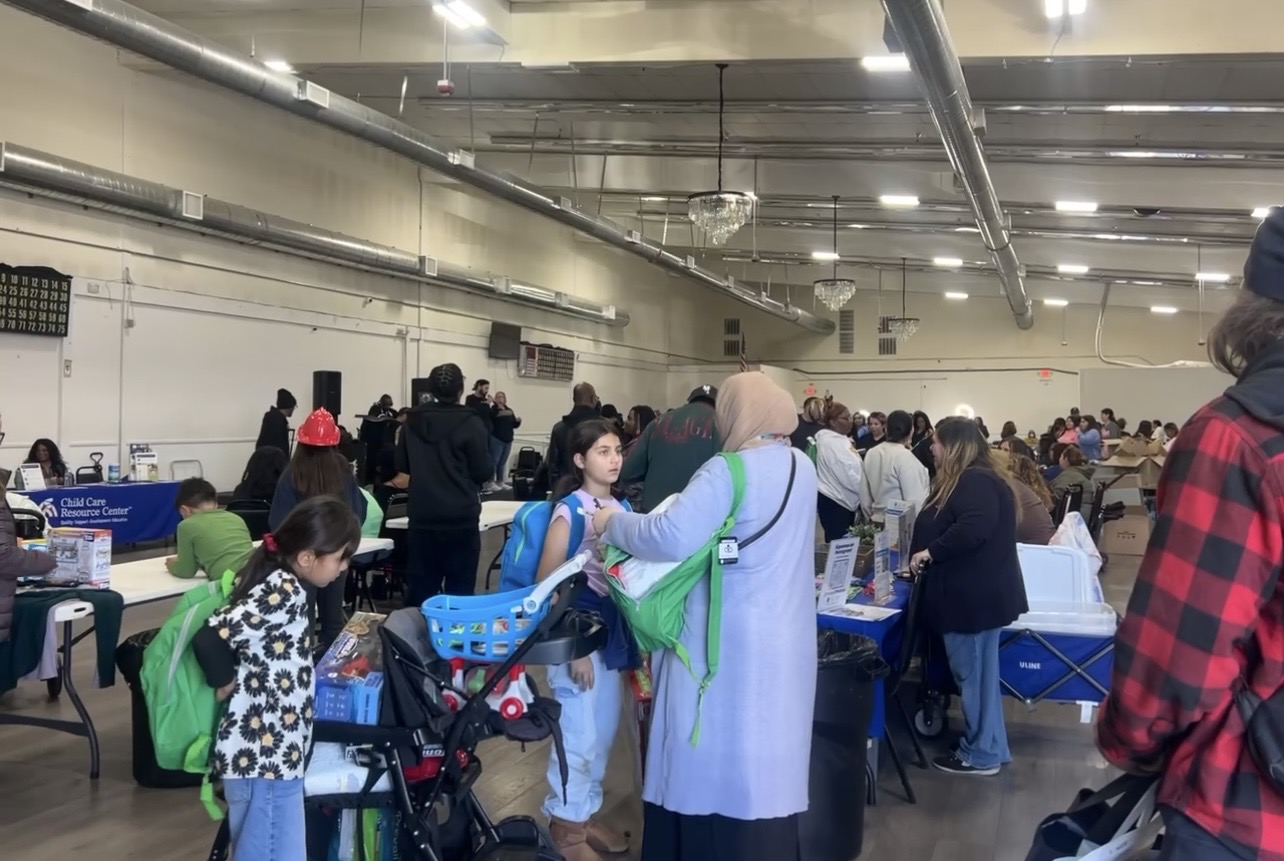
Los Angeles, CA (August 10, 2026) — At a time when more than 3,000 family households are experiencing homelessness in Los Angeles County, Family Solutions Centers (FSCs) are critical hubs connecting thousands of families with urgent services. However, due to state and federal funding cuts to homelessness and housing programs, many faced potential closures.
Thanks to a rapid joint initiative between the United Way of Greater Los Angeles and the Los Angeles County Departments of Homeless Services and Housing (HSH) and Public Social Services (DPSS), the County’s network of FSCs will remain fully operational, providing continuous support for families through the end of the 2026-27 fiscal year.
The Home for Good Funders Collaborative, a philanthropic coalition led by the United Way of Greater Los Angeles, is awarding $680,600 to community-based service providers that operate FSCs in Metro LA, Southeast LA, Westside, South Bay, Antelope Valley, San Fernando Valley, and the San Gabriel Valley. This boost supplements the County’s $2 million investment through HSH and DPSS, ensuring all eight FSCs can continue to provide families with the individualized support they need to regain housing stability.
“HSH was established on the belief that we can achieve better outcomes when we work together across systems instead of in silos,” said Sarah Mahin, Director of HSH. “Our partnership with the United Way of Greater Los Angeles and DPSS reflects that commitment. Together, we are leveraging our collective strengths to ensure families continue receiving the support they need while building a more responsive, coordinated homeless response system for all Los Angeles County residents.”
“Lasting solutions require strong partnerships. Family Solutions Centers embody that collaborative approach, coordinating access to housing, public benefits, employment services, and community-based supports. No family should have to navigate this alone. DPSS is proud to partner with HSH, United Way of Greater Los Angeles, and our community providers to bridge access to needed services,” said Dr. Jackie Contreras, Director of DPSS.
In addition to its investment in FSCs, the Funders Collaborative is awarding $350,000 to service providers operating the County’s seven Access Centers located outside the City of Los Angeles. This funding supplements an investment from the City of LA to keep the County’s network of 16 Access Centers fully operational through the end of fiscal year 2026-27. Access Centers are key entry points for adults experiencing homelessness to access emergency support and referrals to housing.
“Amid devastating cuts to critical services that keep families housed and safe, this partnership shows what’s possible when philanthropy and government come together to respond swiftly to urgent community needs,” said Elise Buik, President & CEO of United Way of Greater Los Angeles. “We’re proud to stand alongside Los Angeles County to ensure families can continue accessing the support they need today while we advance long-term solutions to prevent and end family homelessness.”
This partnership between the public and private sectors aligns resources to help sustain day-to-day operations to better support vulnerable LA County residents. At FSCs, this means ensuring families seeking support can continue to access crucial services without disruption. Funding for FSCs will immediately support outreach and assessment, intake and enrollment and connections to housing and supportive services based on the household’s identified needs. These can include housing and benefits navigation, connections to mental and physical health care, substance use disorder treatment, and employment resources.
In the Antelope Valley, local provider Valley Oasis relies on the FSC model to keep families connected to vital resources and support.
“The Antelope Valley has historically been one of the most underserved regions in Los Angeles County, and families here often face unique barriers simply because of where they live. This investment recognizes that geography should never determine whether a family can access help,” said Sarah Perry, Chief Executive Officer of Valley Oasis. “The Family Solutions Center serves as the front door to housing stability, connecting families with immediate basic needs, public benefits, housing navigation, and coordinated support before a temporary crisis becomes irreversible. Without this center, many parents would be forced to travel 50 to 60 miles to access similar services, an impossible hurdle for families already struggling to make ends meet. This partnership demonstrates what is possible when philanthropy and government work together to ensure every family, regardless of their ZIP code, has access to the support they need to remain safely housed.”
For vulnerable families with children navigating the system, FSCs provide a lifeline and pathway to newfound stability.
“In October 2025, I was going through one of the most difficult times in my life. Due to pregnancy-related medical complications, I had to take an extended leave from work, which caused me to lose a significant amount of income. As a result, I fell behind on my rent for August, September, and October and was terrified that I was going to lose my home,” said Destiny Ruiz. “When I connected with Valley Oasis, everything began to change. Their staff enrolled me in the Homelessness Prevention Program, paid off my past-due rent, and provided five additional months of rental assistance. Because of their support, I was able to remain in my home, focus on my health, and prepare for the birth of my baby without the constant fear of becoming homeless. Today, I am grateful to say that I have been able to maintain my housing and provide stability for my family.”
###
About the Los Angeles County Department of Homeless Services and Housing
The Department of Homeless Services and Housing (HSH) consolidates LA County’s response to homelessness. The driving force behind HSH is increasing accountability and transparency, improving care for people experiencing or at risk of homelessness, and streamlining collaboration with partners including services providers, the County’s 88 cities, Councils of Government, and unincorporated areas to deliver high-quality, life-saving care. The department was formed following a motion passed by the Los Angeles County Board of Supervisors in April 2025 and officially launched January 1, 2026. For more information about HSH, please visit homeless.lacounty.gov.
About the Los Angeles County Department of Public Social Services
The Los Angeles County Department of Public Social Services (DPSS) is the largest local social services agency in the United States, serving more than 4.5 million residents. Through programs and services that support food and nutrition, health care access, cash assistance, employment and workforce development, housing stability, and in-home care for older adults and people with disabilities, DPSS helps individuals and families achieve greater economic stability and well-being. Guided by its mission to connect individuals and families to social services that promote lasting economic mobility, DPSS works in partnership with community organizations, government agencies, and stakeholders to provide accessible, equitable, and customer-centered services that strengthen communities across Los Angeles County. For more information about DPSS programs and services, visit dpss.lacounty.gov.
About the United Way Home For Good Funders Collaborative
The Home For Good Funders Collaborative is a coalition of public and private funders that collectively invest in real and lasting solutions to homelessness in Los Angeles County. Led by United Way of Greater Los Angeles, the Collaborative directs aligned funding to incubate, test, and evaluate promising ideas: new roles, services, system structures, and policies with the potential to move more people into permanent housing. Proven solutions are then embedded into public systems where they can be scaled and sustained to drive change at the level of need. For more information, visit homeforgoodla.org.